Public services reform

Danierla Mercado
Abogada asesora en energías renovables

Last week, the draft of the proposed reform to the public utilities system was published. And, although it hasn’t received the same attention as the pension or healthcare reforms, it’s imperative to give it the focus it deserves. Among other things, it aims to grant the President regulatory powers.
On this occasion, I will only address some relevant aspects related to the President’s new regulatory powers and the sections that mention the development of energy communities. I won’t be able to delve into all 140 articles; however, if there is interest in the topic, I would appreciate it if you would let me know so I can explore more points at another time.
The first thing to note is that this draft seeks to modify Laws 142 and 143 of 1994 (the Public Utilities Law and the Electricity Market Law), and therefore will affect water, sewage, sanitation, internet, natural gas, and electricity services, the latter being my main focus.
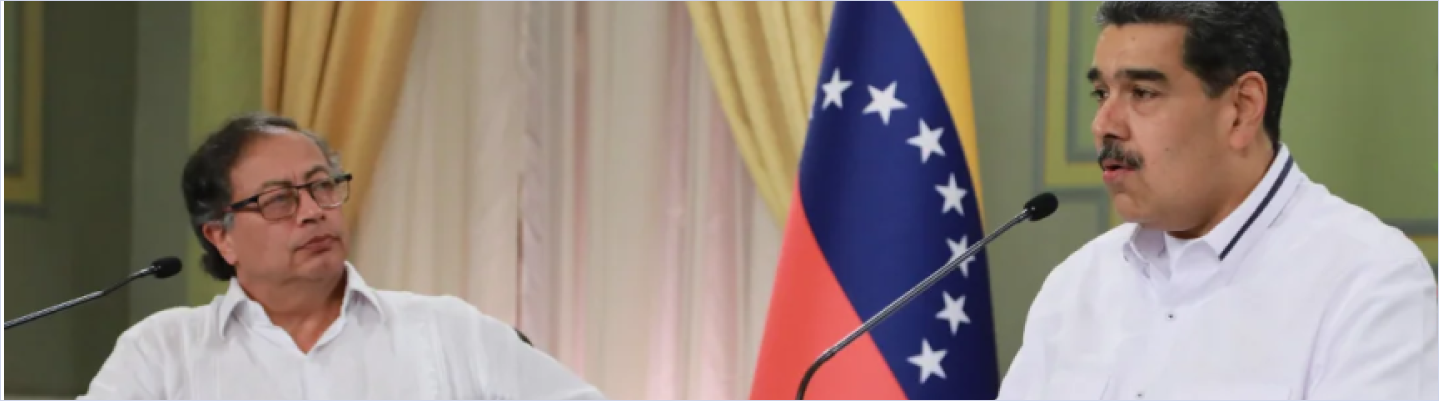
Regarding the President’s role as regulator: the bill proposes that the Energy and Gas Regulatory Commission (CREG) can only exercise its regulatory functions with the President’s authorization. If such authorization is not obtained, the President would have the power to exercise these functions directly, without the need for justification, procedures, or additional formalities. Furthermore, if the Ministry of Mines and Energy considers that CREG’s regulatory projects contradict the Government’s political intentions, the Ministry could submit alternative projects under the “preferential procedure” mechanism, leaving the President with the decision to discard CREG’s proposals and opt for the alternative ones.
It is important to recall that last year, the President attempted to seize control of CREG to set energy tariffs by decree when the wholesale price exceeded $1,000 as a natural response to the droughts caused by El Niño. This situation led the Council of State to suspend the effects of said administrative act and remind the President that his role is to provide general guidelines rather than to regulate directly.
On the other hand, the draft introduces interesting terms for the electricity market, demonstrating a clear intention to highlight the role of energy communities. It creates the term “organized communities,” alluding to those sectors that would be granted a degree of regulatory flexibility so they can ensure their own access to public services. In other words, it would create an opportunity for individuals not formally established as public utility companies to carry out activities typical of this sector, provided they meet certain conditions and their objective is to guarantee the reliable provision of a service themselves.
However, my concern at this point lies in the fact that the government will determine which communities will be able to access this “flexibility.” While this initiative is designed to address the needs of vulnerable communities, in my opinion, any group of people who wish to be self-sufficient should have the opportunity to benefit from this special regulatory framework. In my consulting work, I find that industrial parks and commercial zones have great interest in generating and selling the energy they produce on their own properties among themselves. The need to become independent from conventional service providers is growing.
The concept of “organized communities” also offers the benefit of allowing participants to freely set service rates (under the principle of private autonomy) and provides the opportunity to meet the needs of others. For example, Community A could install a solar plant to serve its 150 residents, but if it generates more energy than necessary, it could sell the surplus to Community B at a freely agreed-upon price.
To avoid going into too much detail, I am available for your comments to address other aspects of the project, such as:
The creation of state-owned industrial and commercial enterprises providing residential public services (EICE E.S.P.).
The functions of the Oversight Representatives (a new position).
The creation of a Special Subsidy to Guarantee a Minimum Living Level in the electricity service.
The elimination of the Uniform Conditions Contract in favor of the Regulations for Users and Subscribers of Residential Public Services. And
Changes to the amounts that the Superintendency of Public Utilities can impose as fines, since the project seeks to increase the current limit of 2,000 current monthly legal minimum wages to 100,000.